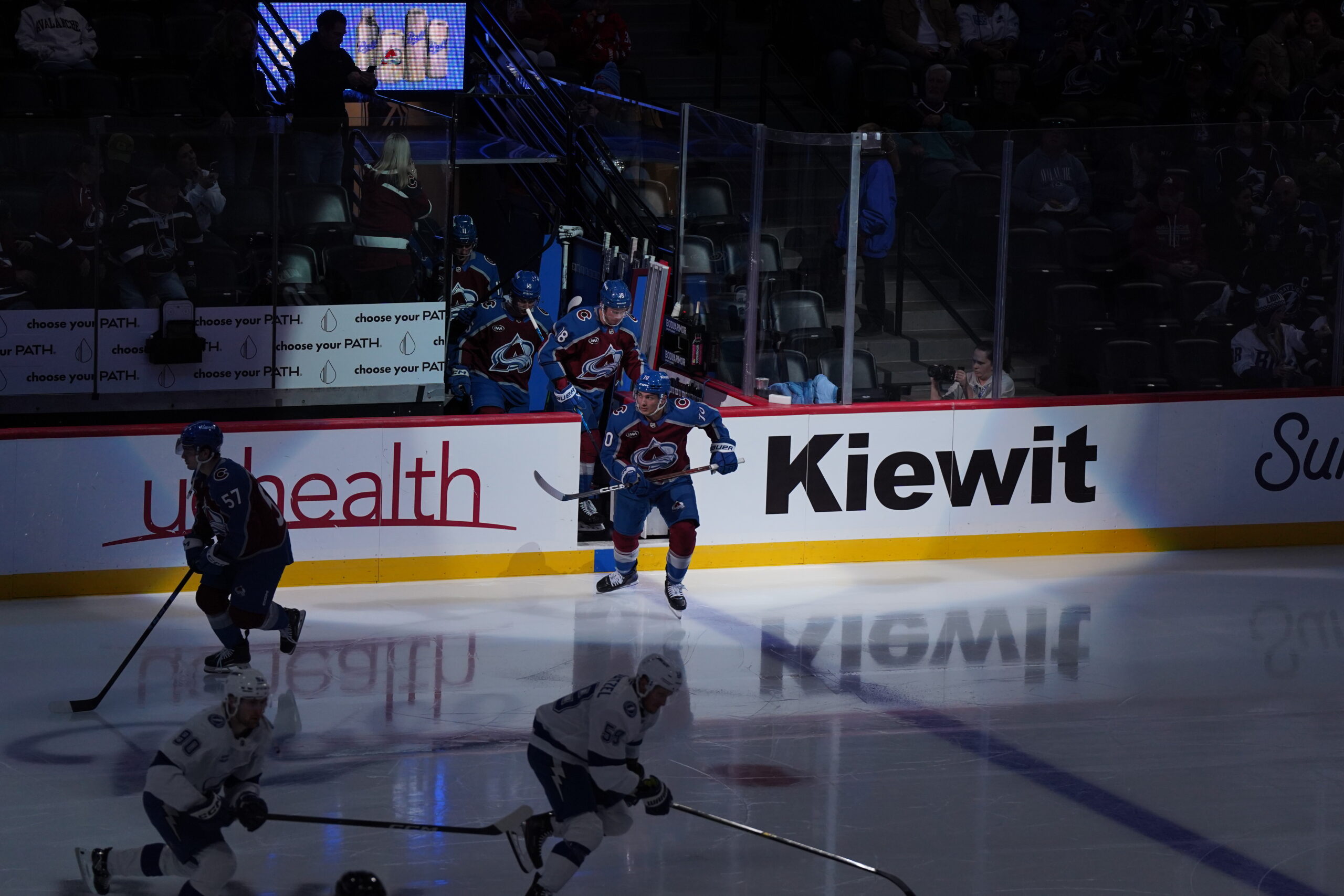
On a winter night in Denver, four-time Olympic medalist Hilary Knight stands at the center of something far bigger than a single game. One of the most decorated players the sport has ever known: a World Championship icon, and set to top the record for most Olympic appearances by any American hockey player, she now occupies a different kind of role.
As captain of both Team USA and the Seattle Torrent and as a driving force behind the formation of the PWHL, she has become one of the game’s chief ambassadors helping transform visibility into viability. Moments like this in Denver mark how far women’s hockey has come, and how much further it still intends to go.
The building blocks of women’s hockey aren’t only laid on Olympic ice. Sometimes, they’re set in cities still waiting for a team in front of fans seeing the professional game up close for the first time — well, maybe a second time.
When the PWHL Takeover Tour came to Denver last January, it set a U.S. attendance record at 14,018 fans, and that was with the Denver Broncos playing a wild-card game down the street.
That record has since been broken three times as women’s hockey continues to pull crowds in the PWHL’s third season. This year, the league added two expansion teams: the Vancouver Goldeneyes and the Seattle Torrent.
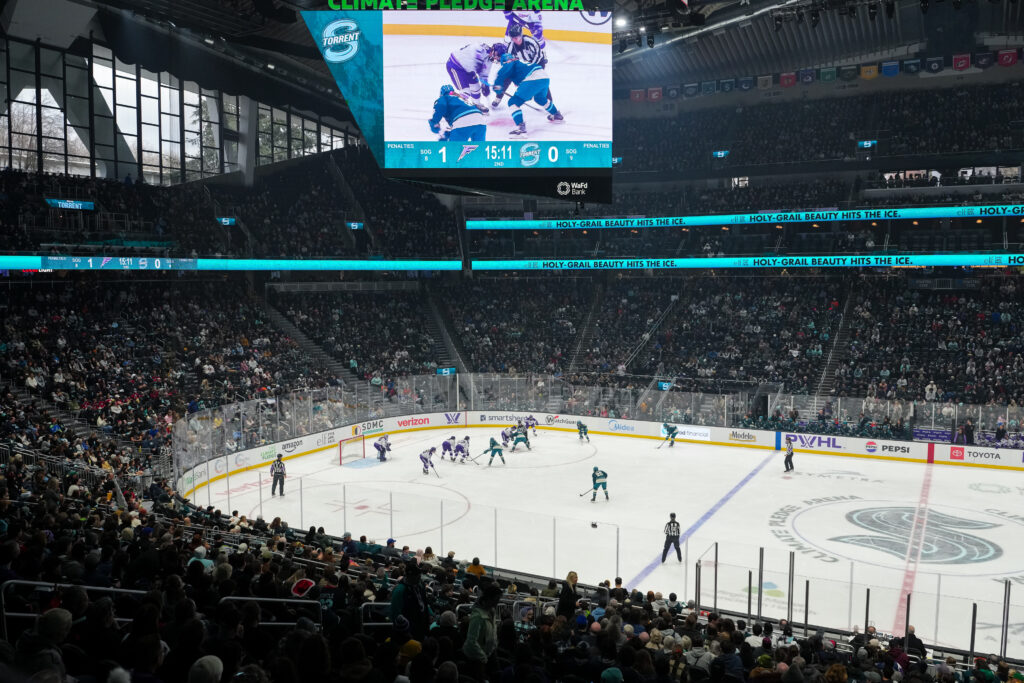
Denver hosts two Takeover games at Ball Arena with the first Denver matchup between Vancouver and Seattle on Sunday, Jan. 25 at 4 p.m. MT.
It is the 10th of 16 neutral-site matchups on this season’s Takeover Tour and will feature 14 players who will represent their countries at the 2026 Olympic Winter Games.
Colorado’s sports fans will have their hands full again with a Denver Broncos AFC title game kicking off at 1 p.m. MT, but expect them to show out.
“I hope there’s a future here for PWHL,” said Knight. “I always hope fans have an entertaining experience and one where they wish they’re going to come back and watch another PWHL event. I think it’s special to have hockey in the mountain districts, and for me personally just being from Idaho and representing the mountains, it’s a lot of fun to be able to play here in Denver.”
Through her role on the founding board of the Professional Women’s Hockey Players Association, she has experienced the highs and lows of launching the professional women’s game.
“We got a lot of no’s before this league became what it is now and that was a challenge.”
“A lot of people are relying on you to succeed in that way,“ she said. “It’s really understanding you’re part of something bigger than yourself… So to have success and to find an investor group that believed in this product and continued to scale it is outstanding and really encouraging. Uncertainty for athletes is always a big challenge.”
She confessed that expansion is scary at times. “There are stressors about picking up and moving to a new market, right? That’s just the name of the game. When you sort of wrap your head around that, once we get settled, it’s going to be awesome and we’re really looking forward to what’s next.”
The success of the women’s game on an international stage has undoubtedly paved the way for the professional league. Where the Olympics have showcased talented women at the top of their sport, the PWHL sustains them.
“Hockey doesn’t disappear every four years.”
“You have the best players in the world playing in the PWHL, first and foremost,” she specified.
“But secondly I think after the Olympic Games, we have professional programming, so fans are going to be entertained. The Olympics are super special in their own right.
It’s a completely different thing, but to be able to follow that storyline of your favorite player that you see on the world stage, now you can see her playing for your local club or a club that you’ve attached yourself to — I think that’s really special. I think it increases the visibility… It’s consistently night in and night out you’re getting great games… It’s wonderful hockey and it’s an amazing product.”
Even in what will be her fifth Olympic appearance, with a gold medal and three silvers to her name, the joy of the opportunity is resolute.
“You just have to have a childlike mentality to everything,” she revealed, “try and be a sponge and absorb as much as you can, and know when to hit the recharge button as well.”
“The Olympics are so special,” she continued. “It’s really special to be able to represent your country on a world stage. Being an ambassador through sport is a tremendous responsibility, but one I think our group takes on their shoulders really well.”
Knight balances the inevitable excitement around the Olympics with her sense of duty to her team.
“Half of our team isn’t going to the Olympics,” she spelled out. “You really have to put everything on the line for them and continue to plod our way through this league so we’re in a good position at the end of the year and set ourselves up for success when we come back from that Olympic break as well.”
Women’s hockey has changed so much with real opportunities post-college to make a living. Women can keep playing and it’s impacting the future of the game.
Now D1 players have something they can dream on after university including opportunities abroad, but especially the pro-league in North America. Young players can join PWHL teams made up of experienced veteran players. They get to continue their hockey careers inside a season instead of solely relying on international play.
With that, the value of the women who came before them is tenfold. A true veteran class of women’s hockey players, like Hilary Knight, is here and they’re shaping the next generation of superstars — all while lighting up the league themselves.
Knight had Angela Ruggiero, Jenny Potter, and Cammi Granato as mentors. Now young up-and-comers like Julia Gosling and Hannah Bilka get to have Knight as an everyday teammate.
“I think we had (veterans) on the international side,” she explained, “but to have it more consistently on the professional side is awesome. It’s a really unique opportunity for some of these younger faces that are year one in our program that get to utilize and tap into the wisdom of some of the older players that we have in the room, because we’ve seen so many different iterations and we’ve seen a lot. I’m hopeful that we’ve created a room where we can really unlock everybody’s potential in that way and we can cut that learning curve and get going as quickly as possible.”
The blend of experience in the PWHL should also make the Olympics more competitive than ever.
“For many years it was just American-style, Canadian-style, European-style, and the Finns play different than the Swedes, and likewise North Americans, so it’s just awesome to get different reps with different styles and exposure that way and other coaches,” she pointed out. “You can really put together a nice body of work when you get on the international stage.”
She is every bit the intense competitor with an insatiable drive to win as she is a steward of the game.
“There’s a lot of advocacy that still needs to happen in our space right now and we’re making steps. The league is a great first step and we need to continue to build.”
Reflecting on how a young girl watching her first professional women’s hockey game tomorrow in Ball Arena might have a different path through hockey from her, Knight expressed her hopes for the next generation.
“I’d like to think that there are less barriers for her to play hockey at the highest level, have a career path that (pays) a salary, and have the support system behind you to compete at this level,” she said. “Maybe it’s also just being a fan as well. I’d like to think that we’re reducing barriers as we continue to grow the PWHL and continue to spark interest in playing women’s hockey.”
The second Takeover Tour game at Ball Arena this season is scheduled for Sunday, Mar. 15, between the New York Sirens and Minnesota Frost.